%20-%204.png)
We Teach the Way We Want Kids to Learn
What happens at GAP School before the kids arrive? A whole lot of learning!
For two weeks before the first backpacks arrived, GAP educators became the learners. We moved. We built things. We spent time outside. We worked in groups. We wrestled with questions that didn't always have obvious answers. We reflected, disagreed, revised our thinking, laughed a lot, and occasionally got wonderfully off track because someone asked a really good question. In other words, we learned the way we want kids at GAP to learn.
Of course, professional development also includes the less exciting (and necessary) parts of getting ready for a school year. There are policies to review, schedules to understand, procedures to practice, and approximately 4,000 logistical details to figure out before a school fills with children.
We believe preparing to teach at GAP has to go deeper than that. If we're asking educators to create classrooms rooted in curiosity, collaboration, creativity, compassion, connection to nature, and growth, then we need to create opportunities for our educators to experience those things, too.
Relationships First (For Grown-Ups, Too)
One of our core beliefs at GAP is that meaningful learning happens in the context of strong relationships. That's true for kids. It's also true for adults. So before we talked deeply about curriculum, we spent time thinking about how we work together.
Our educators explored their own values. They talked about what they need from one another. Co-teaching teams worked through collaboration agreements. We talked about communication, problem solving, and what it looks like to be part of a community where people can disagree, make mistakes, ask for help, and keep growing together.
We tackled our “Unwritten Handbook.” Instead of handing educators a list of expectations, we asked them to uncover them together: What are the little things we do at GAP that help this place work? How do we show up for kids? For families? For each other? What would we want a brand-new educator to understand about being part of this community?
We could have put those answers on a slide. Discovering them together was far more valuable. Which, as it turns out, is exactly what we believe about kids and learning.
If Kids Can Discover It, Why Would We Just Tell Them?
This question showed up again and again throughout our professional development.
It would have been faster for us to stand at the front of the room and deliver information. Instead, educators sorted, discussed, built, questioned, moved, created, reflected, and problem-solved. That wasn't just because it's more fun, It was intentional modeling.
At GAP, inquiry-based learning doesn't mean adults never teach directly. Sometimes direct instruction is exactly what a learner needs. But we are constantly asking ourselves:
Is this something I need to tell them, or is this something they could discover?
Could they investigate it?
Could they wrestle with it?
Could they build something?
Could they test an idea?
Could they talk about it with someone else?
Could they make a mistake and learn something from what happens next?
When we give learners information they could have discovered, discussed, tested, or constructed themselves, we may be taking away one of the richest parts of learning.
What Do We Actually Want Kids to Carry With Them?
One of the most important conversations of our two weeks started with a deck of values cards. We talk often about wanting GAP learners to become more than strong readers, writers, mathematicians, scientists, and thinkers. We care deeply about the humans they're becoming.
But that led us to a harder question: What, exactly, do we mean by that?
If we say GAP helps develop certain qualities in children, we should be able to name them. We should be able to recognize them. And, most importantly, we should be intentional about creating opportunities for kids to practice them.
Our team narrowed a whole table full of possibilities down to six GAP values:
Collaboration. Curiosity. Creativity. Compassion. Nature Connection. Growth.
Naming them was only the beginning. We started asking what curiosity actually looks like in a seven-year-old. What does collaboration look like when a group disagrees?How do we help a learner recognize their own growth? How do we create a genuine relationship with the natural world rather than simply spending time outside? Those are questions we want to keep asking all year. We want our values to be visible in the way we live and learn together.
We Want the Messy Middle to Be Visible
We also spent time thinking about what our classrooms and outdoor learning spaces communicate about learning.
Traditionally, schools are very good at displaying the end. The polished essay. The beautiful art project. The science fair board. The final presentation. Those things are worth celebrating. But we're increasingly interested in displaying something else:
the journey. The original question. The first idea. The sketch that didn't work. The feedback from a friend. The crossed-out sentence. The surprising discovery. The revised plan. The moment someone said, “Wait. I think we were wrong.”
We want our learning spaces to tell those stories, too. Because when kids can see the process of learning, they begin to understand something incredibly important: Learning isn't knowing everything the first time. Learning is wondering, trying, getting stuck, asking for help, changing your mind, practicing, revising, and eventually being able to look backward and realize, Wow. Look how far I've come.
And We Asked Some Harder Questions, Too
We spent time thinking about executive functioning and the demands we place on learners. We revisited Collaborative Problem Solving and dug into what can get in the way when a child is struggling. We talked about expectations, support, regulation, independence, and how adult assumptions can shape the way we interpret a child's behavior.
Those conversations deserve more than a paragraph here. So we're going to give them more. Over the next several weeks, we'll be sharing some of the ideas our educators explored before school began, because we think understanding why we do what we do matters.
We'll talk about what happens when a child knows what to do but can't seem to do it.
We'll dig into Collaborative Problem Solving.
We'll share more about making learning visible.
We'll explore what inquiry actually looks like in practice.
And we'll keep asking one of our favorite questions: What does a child need from us in order to thrive?
Then the Kids Arrived
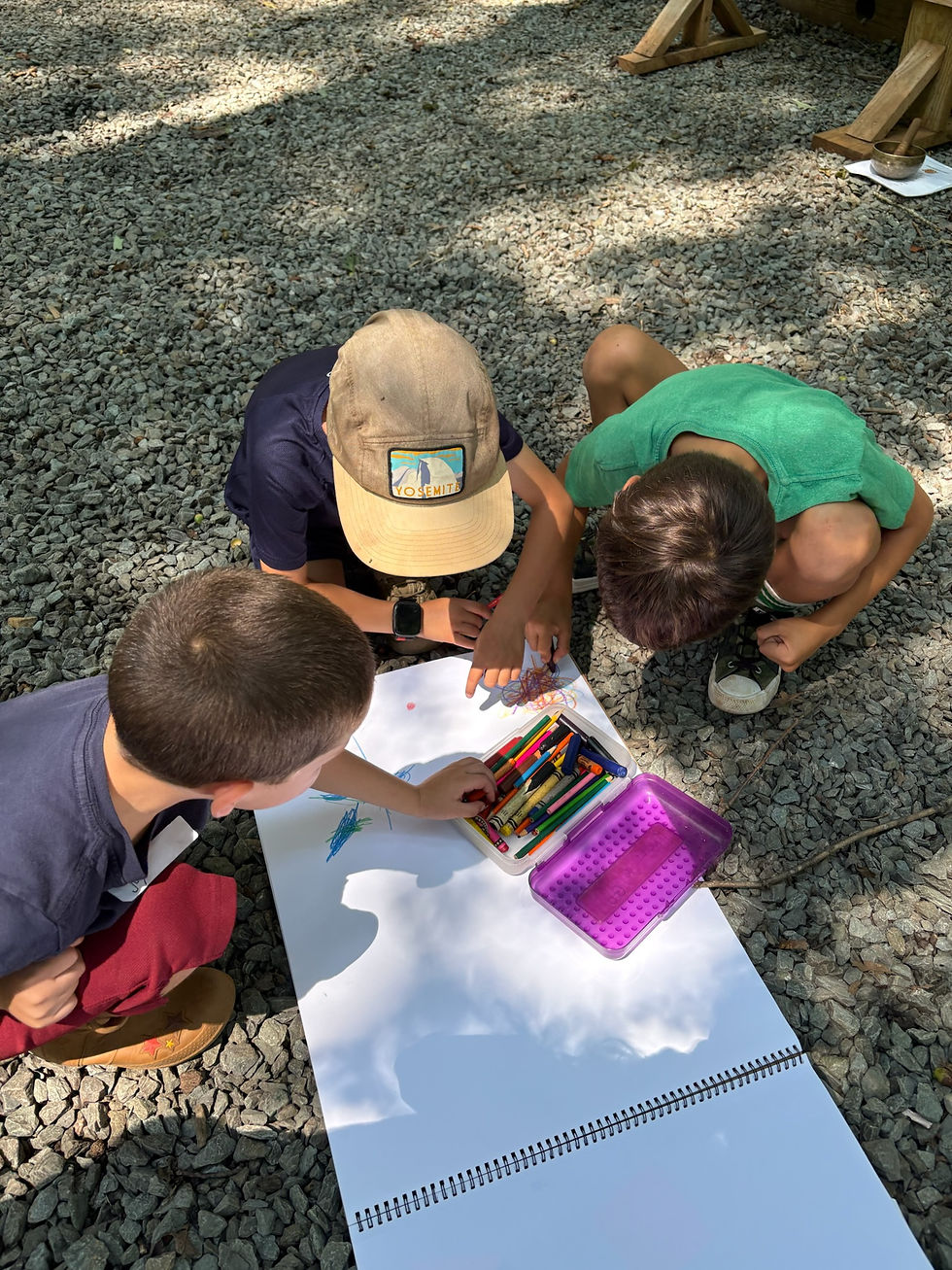
After two weeks of all this thinking, planning, questioning, and preparing, the kids finally came. And suddenly the spaces we'd been carefully arranging were filled with backpacks and water bottles. The trails had feet on them. The tables had projects beginning. There were nervous kids and excited kids and tired kids. There were new friendships forming. There were bugs to investigate, expectations to co-create, problems to solve, and approximately nine million questions. In other words, school began.
Our professional development was never about creating a perfectly scripted year.
It was about building a shared foundation strong enough that our educators can respond thoughtfully to the actual children who walk through our doors.
We want GAP learners to be curious. We want them to collaborate. To create. To care deeply about other people and the natural world. To take appropriate risks. To make mistakes. To ask good questions. To recognize their own growth. And to leave GAP believing deeply in their own ability to learn.
And if that's what we want for our kids, it seems only right that we ask the same of ourselves.


Comments